What is Accountability Beyond Punishment?
This weekend at the BAFTAs, Michael B. Jordan and Delroy Lindo were presenting an award when John Davidson, a white man who is a Tourette Syndrome campaigner, had a tic that included shouting out the N word.
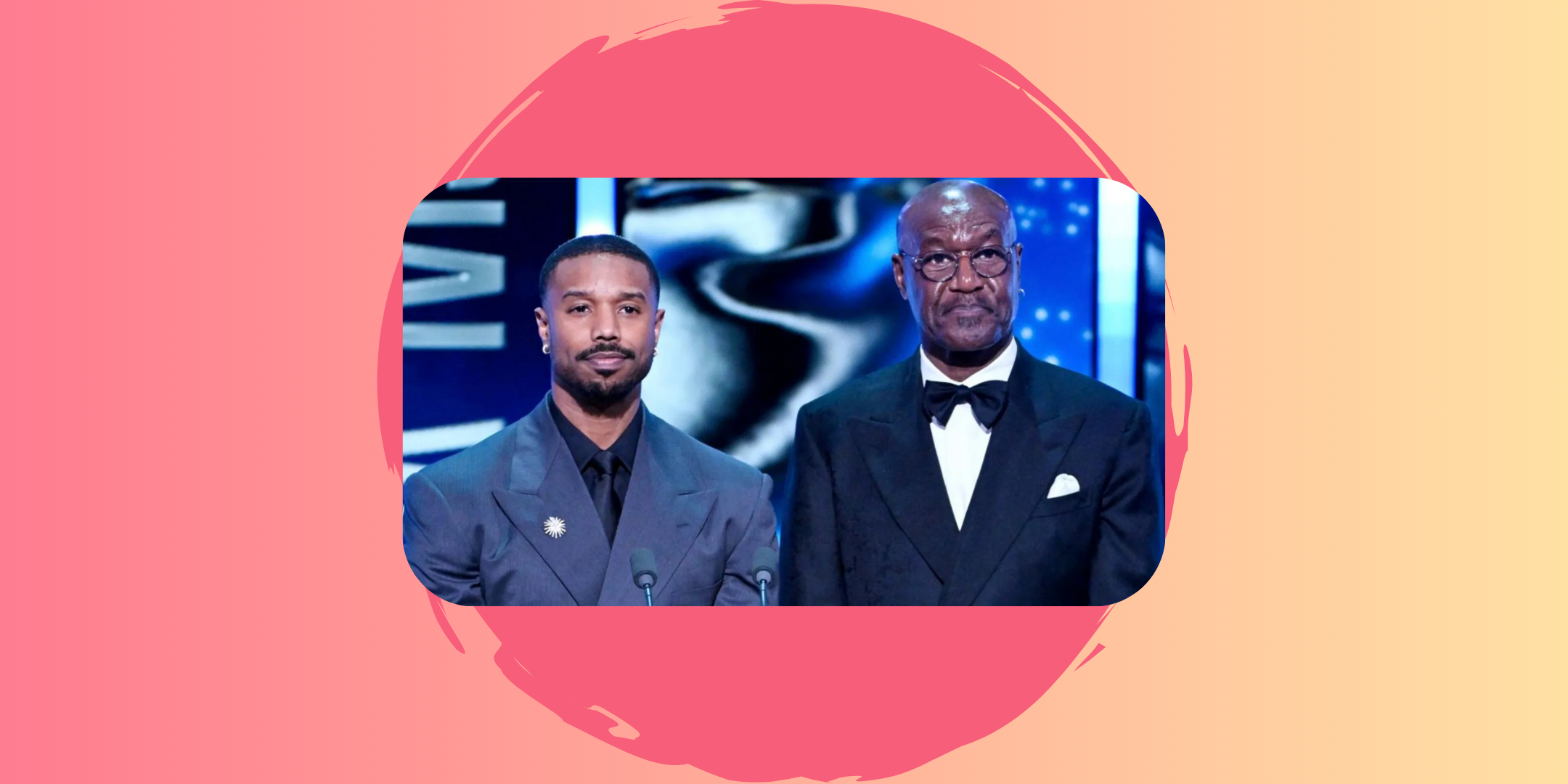
Photo via Getty Images
The internet has been in an uproar about this incident, and many people are struggling to hold nuance and multiple realities in their response. I took to my social media to share my thoughts on the difference between impact and intent, highlighting that it does not matter if the tic is involuntary, two prominent Black actors stood on stage in front of their colleagues and the N word was yelled at them. There was harm done there, regardless of why.
The real question here is why, on a pre-recorded show, did the BBC decide to keep this moment in? They successfully edited out Akinola Davies Jr. saying “Free Palestine,” which is not a slur so much as it is a plea for the end of violence. But a word that comes from a long history of violence against the very demographic that were on stage in that moment, a word so politically and emotionally charged I only refer to it by it’s first letter, that made it to broadcast.
When I posted about the incident, I borrowed and amended a phrase from Ericka Hart, and said “your disability does not absolve you of your racism.“ I was met with a lot of pushback telling me that John Davidson is not racist. I honestly had not heard of this man before this incident, I didn’t see most (any?) of the films nominated that night. But here’s the thing, I did not call Joh Davidson a racist. I was talking about racism, which we are all capable of perpetuating and participating in, especially us white people. I was focusing on the impact on Michael B. Jordan, Delroy Lindo, and any Black person in the audience or watching the broadcast who heard it. I was not focusing on the intent or lack there of, because my point was that the impact is there regardless. I could accidentally punch you in the face, I was swinging my arm and didn’t realize you were there. But my lack of intention doesn’t make your nose stop bleeding.
Racism, to me, is a verb more than it is a noun. (I know that’s not literally true, hear me out.) I talk about allyship in the same way. Our actions can be racist, we can contribute to racism in small and large ways every day. Even as someone who considers myself to be anti-racist, I am still existing in a system that benefits me. I am imperfect and make mistakes. I also try to correct those mistakes and hold myself accountable in those moments. And that is the piece people are looking for. There is a lot of ableist rhetoric going around about his right to be in that room, and I’ll leave the details to disability advocates, specifically those with Tourettes. But the priority here is repair. Accountability. An apology is not shaming the individual for having a disability, it’s an acknowledgement that something you did caused harm. Saying the N word has the impact of racism on the people hearing it, even if they know where it’s coming from. A person can participate in racism, even unknowingly or unintentionally, without being labeled as a racist. (Though many would argue, and I’d happen to agree that all white people are inherently racist in a system that is built on and maintained by white supremacy.)
I think a lot of the issue here is that people don’t understand a vision of accountability that is not akin to punishment. Too many people are terrified of admitting their mistakes, and I believe that is in part because of our societal attention on punishment. Our society is so quick to turn to prison, to corporal punishment, to sentencing instead of reform, instead of healing, instead of actual accountability.
This weekend, coincidentally, I also saw a press conference where New York City Mayor Zohran Mamdani was putting a travel ban in place amid a massive blizzard. Only essential workers were to be out on the streets. The clip I saw was of a journalist asking what the penalties were for people caught traveling that evening. Mamdani responded “the focus here is not on on punishment on penalty, the focus rather is on compliance.“ The Mayor wasn’t enforcing a rule to rack up arrests or have some illusion of being “tough on crime,” like we’re so accustomed to in this country. Instead, he was putting a ban in place because it was in the best interest of his communities. But too many people don’t understand the point of a rule that has no punishment. I would say no consequences, but the blizzard was likely to come with it’s own set of consequences. Mayor Mamdani was, in that moment, asking people to be accountable for their own actions. There wasn’t punishment or retaliation attached, just an attempt at safety.
If you can’t see the thread I’m weaving, that is what accountability looks like without punishment. John Davidson, BAFTA, and the BBC can take accountability for the awful moment that happened without facing punishment, or being “cancelled.“ Actually, the BBC had their chance to edit this moment, and decided against it. BAFTA had Alan Cumming, the host for the evening, make an apology that did not land well with many. (“We apologize if…”) I can think of multiple other ways this situation could have been handled at different levels, and several advocates within disabled communities have talked about accommodations and disclaimers and resources that could have been available. Because at the end of the day, though the tics are unavoidable, the moment that we are discussing could have had a much smaller impact. Inclusion can not come at the expense of safety. Too often in these conversations Black people are asked or expected to make space for others and not have reactions to very real harm they experience. I want to live in a world where we can hold all of the complexities and move forward with more intention. I hope if nothing else comes of this situation, it is a more nuanced conversation for the future.